The Edge Blog · Office Trends · May 27, 2024 · 7 min read
Office Energy Self-Sufficiency: Buildings that Generate Their Own Power
In the evolving landscape of commercial real estate, a revolutionary concept is gaining momentum: office buildings that generate as much energy as they consume, or in some cases, even more. This shift toward energy self-sufficiency represents…
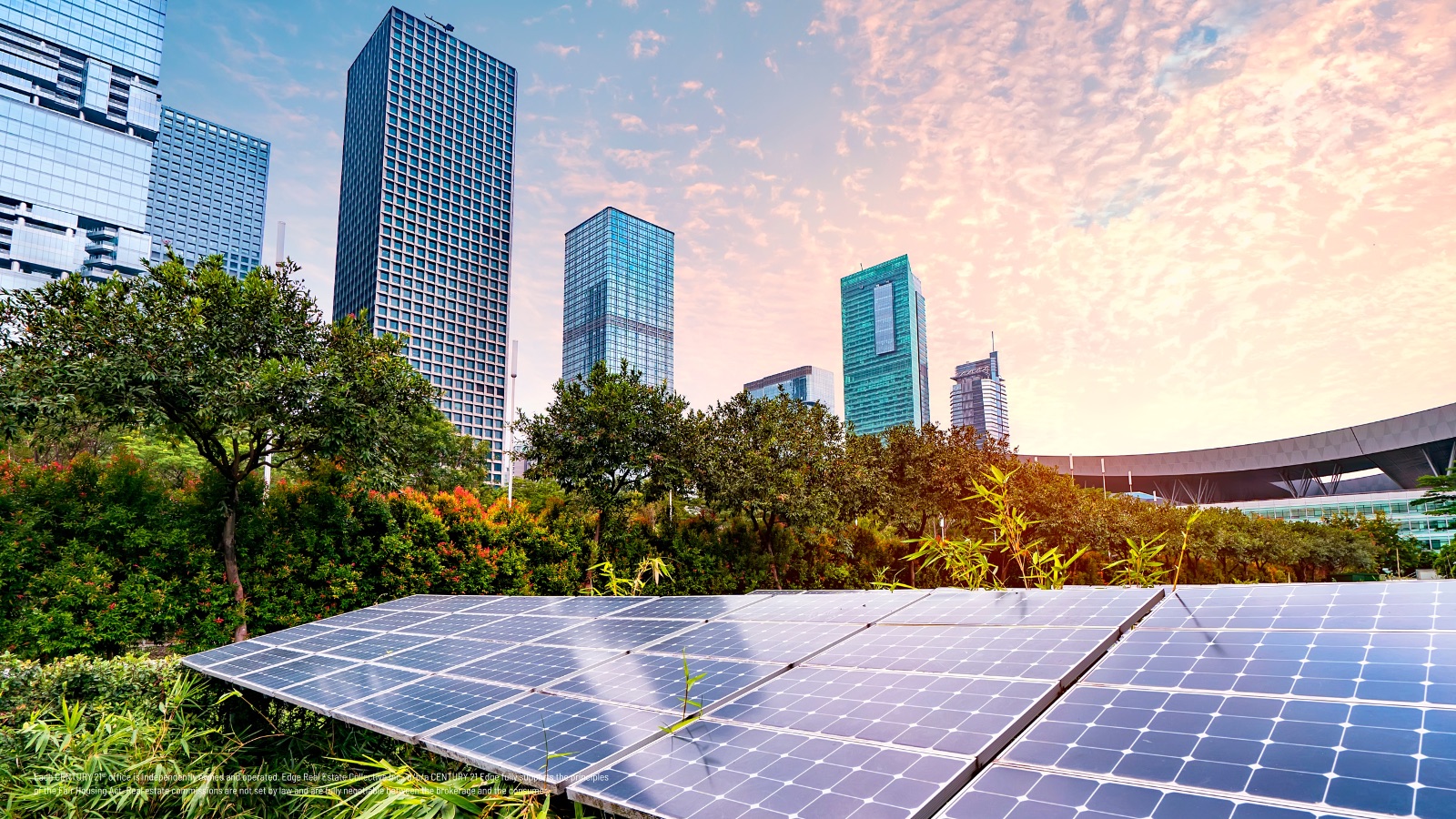
In the evolving landscape of commercial real estate, a revolutionary concept is gaining momentum: office buildings that generate as much energy as they consume, or in some cases, even more. This shift toward energy self-sufficiency represents not merely an environmental ideal but increasingly a sound business strategy for forward-thinking property owners and developers. As energy costs rise and sustainability becomes a corporate priority, buildings that produce their own power are emerging as the new gold standard in commercial property.
The Business Case for Energy Self-Sufficiency
The drive toward self-powered office buildings stems from compelling economics as much as environmental concerns. Traditional commercial buildings typically spend 30-40% of their operating budgets on energy, creating a significant expense line that cuts directly into net operating income. Self-powered buildings dramatically reduce or eliminate these costs, transforming energy from a perpetual expense into a one-time capital investment with ongoing returns.
Beyond direct cost savings, energy-independent buildings offer protection against utility rate volatility. Commercial electricity rates have increased by more than 20% in many markets over the past decade, with further increases anticipated as utilities invest in grid modernization and storm hardening. Self-powered buildings essentially lock in energy costs, providing budget predictability that tenants and owners increasingly value.
The tenant attraction and retention advantages can't be overstated. Corporate sustainability commitments have moved from public relations preferences to operational mandates for many organizations. Companies with net-zero carbon pledges—now including more than 60% of Fortune 500 firms—actively seek spaces aligned with these commitments. Energy-independent buildings offer these tenants a turnkey solution for reducing their carbon footprints without requiring additional investments or offsets.
Property value enhancement provides another compelling incentive. Highly efficient and sustainable buildings command rent premiums of 4-7% while enjoying occupancy rates approximately 3% higher than comparable conventional properties. When these buildings achieve true energy independence, these premiums often increase substantially, particularly among tenants with stringent environmental, social, and governance (ESG) reporting requirements.
Technologies Enabling Energy Independence
The path to self-powered office buildings typically involves integration of multiple technologies, each contributing to overall energy self-sufficiency. Integrated building design approaches these technologies not as add-ons but as core building systems designed to work in harmony.
Solar photovoltaics remain the cornerstone technology for most energy-independent commercial buildings. Modern commercial solar installations achieve efficiency rates exceeding 20%, with building-integrated photovoltaics incorporating solar collection directly into building materials such as windows, facade elements, and roofing membranes. The Bloomberg Tower in New York demonstrates how even dense urban environments can harness significant solar energy through creative integration across vertical surfaces and setback areas.
Wind energy capture at the building scale has evolved significantly from earlier experimental designs. Micro-turbines integrated into building parapets, specially designed wind scoops that channel airflow through turbines in mechanical areas, and vertical-axis wind turbines placed strategically on rooftops now supplement solar generation without the aesthetic and noise concerns that once limited urban wind power. The Pearl River Tower in Guangzhou exemplifies how building form itself can accelerate wind through integrated turbines, dramatically increasing energy harvest potential.
Ground-source heat exchange systems leverage the earth's consistent temperature to dramatically reduce heating and cooling energy requirements. By circulating fluid through underground loops, these systems provide heating in winter and cooling in summer with minimal energy input, typically delivering 3-5 times more energy than they consume. The Edge in Amsterdam combines this technology with solar power to achieve energy-positive operation, producing approximately 102% of its energy needs annually.
Energy storage capabilities have transformed the viability of self-powered buildings by addressing intermittency challenges. Advanced battery systems, thermal storage solutions that bank excess cooling or heating capacity, and hydrogen production from excess renewable energy collectively create resilient systems that maintain operation regardless of weather conditions or time of day. The Bullitt Center in Seattle maintains energy self-sufficiency even in the notably cloudy Pacific Northwest through strategic storage deployment that shifts excess summer production to meet winter demands.
Implementation Strategies for Commercial Properties
Achieving energy self-sufficiency requires a thoughtful strategy tailored to each property's unique characteristics. The retrofit approach transforms existing buildings incrementally through phased improvements. This typically begins with aggressive efficiency measures that reduce energy demand, followed by staged implementation of generation technologies. The Empire State Building's groundbreaking retrofit demonstrates this approach, reducing energy consumption by 40% before adding renewable generation to minimize required generation capacity.
New construction offers greater flexibility, allowing building form, orientation, and systems to be optimized for energy production from the outset. These projects typically incorporate passive design elements that minimize energy needs, ultra-efficient building envelopes, and integrated energy generation systems. The American Geophysical Union headquarters in Washington, DC exemplifies this approach, incorporating geothermal wells, solar PV, and wastewater heat recovery to achieve net-zero energy certification.
District-scale implementations represent a promising alternative for properties with limited on-site generation potential. By creating energy-sharing agreements across multiple buildings, these systems balance varying load profiles and generation capacities. The District 2030 initiative in Seattle connects multiple properties through a shared thermal loop that transfers excess heat from buildings needing cooling to those requiring heating, dramatically reducing aggregate energy demand before applying renewable generation.
The phased approach provides the most practical path for most commercial properties. This begins with efficiency improvements that reduce demand, transitions to on-site renewable generation scaled to the reduced load, adds storage capacity to mitigate intermittency, and finally incorporates building management systems that optimize energy use and production in real-time. The Rocky Mountain Institute's headquarters followed this methodology to achieve energy self-sufficiency while maintaining significantly lower construction costs than comparable commercial buildings.
Navigating Challenges and Limitations
While the benefits of energy self-sufficiency are compelling, several challenges must be addressed. Initial capital requirements remain the most significant barrier for many properties. Self-powered systems typically increase construction costs by 5-15% for new buildings and require significant investment for retrofits. However, innovative financing models, including power purchase agreements, energy savings performance contracts, and green bonds, have emerged to mitigate these upfront costs, allowing property owners to fund improvements through future energy savings.
Technical constraints vary by property and location. Buildings with limited roof area or solar access, properties in locations with insufficient wind resources, or structures with restrictions on exterior modifications face additional challenges. Creative approaches, including community solar arrangements, off-site renewable procurement, and investments in neighborhood-scale generation, can overcome these limitations when direct on-site generation proves insufficient.
Regulatory hurdles continue to evolve as building codes and utility regulations adapt to self-powered buildings. Interconnection requirements, standby charges, and limitations on selling excess power back to the grid can impact project economics. Forward-thinking jurisdictions have modified regulations to encourage energy independence, with cities like Seattle and San Francisco adopting building codes that actively incentivize on-site generation and storage.
The Future Landscape
Looking ahead, several emerging trends promise to accelerate the adoption of energy-independent office buildings. Advanced building materials, including transparent solar collection surfaces, energy-generating facade elements, and roads or walkways that harvest kinetic energy from foot traffic, will expand generation potential beyond traditional solar panels. The convergence of artificial intelligence with building management systems will further optimize energy use and production through predictive analytics and automated adjustments that maximize self-sufficiency under varying conditions.
The transition from energy consumers to energy producers will fundamentally transform how commercial buildings operate and generate value. Properties that achieve energy independence frequently become neighborhood energy hubs, selling excess production to adjacent buildings and creating new revenue streams from what was once a cost center. Some pioneering projects have turned their energy systems into profit centers that contribute significantly to property returns.
Conclusion: Strategic Positioning for the Future
As commercial real estate continues evolving toward energy independence, property owners face a strategic choice: lead, follow, or risk obsolescence. Buildings that generate their own power offer compelling advantages in operating costs, tenant attraction, carbon reduction, and long-term asset value appreciation. While challenges exist, they pale in comparison to the potential downsides of inaction as tenant expectations and energy costs continue their upward trajectory.
For commercial property stakeholders weighing this transition, the key lies in developing a strategic roadmap tailored to each property's unique characteristics and constraints. By starting with efficiency improvements that reduce demand, and then incrementally adding generation and storage capabilities, even conventional buildings can progress toward energy independence while maintaining competitive returns throughout the transition.
The question for forward-thinking property owners is no longer whether to pursue energy self-sufficiency, but how quickly and through which technological pathway. As early adopters demonstrate the viability and advantages of this approach, energy independence is poised to transform from competitive advantage to market expectation—making now the optimal time to begin this journey.